Monday, 31 October 2016

NDM: Government internet syping

Society questions the governments authority over there privacy

Close up of silhouetted male hand typing on laptop keyboard

Link: https://www.theguardian.com/commentisfree/2016/oct/30/government-data-collection-citizens-acceptance-global-rights-privacy-free-speech

Summary:

This article shows how a Hollywood film has shed light on a subject matter in which society and citizens have remained passive about and haven't been aware of its existence until now. The film known as 'NSA Whistleblower' has shed a large light amongst people regarding government surveillance programmes. The British Intelligence have been secretly spying on people's online activity of decades.

Statistics:

  • The British Intelligence have been spying on the public for more than 10 years
  • The Human Rights treaty was signed by 47 nations
  • They have stored and catalogued 100,000's of peoples address and data
Own view:

I believe that it is fine for the government to act in this way only if it is in the best interest of the the country. For example, when the Paris attacks occurred, the government found it necessary to regulate people's online activity to ensure that there were no extremist content being advocated amongst people. In addition, even if they were spying on people's online activity, they aren't harming people. How will people know that they are being spyed on? Exactly! They won;t therefore, there is no real problem of the government spying on it citizens as it is for the best interest of the British public.

NDM: Teenagers need to be better educated on sexting

Sexting education for the youth

Mobile phone user

Link: https://www.theguardian.com/australia-news/2016/oct/31/teens-should-be-educated-about-safer-sexting-not-just-abstinence-report-says

Summary:

A report made by the Yfoundations youth health sector support have stated that current knowledge and advice regarding sexting to the youth is very much outdated. Majority of the books that the foundation discovered were very much aimed at working men and women rather than youngsters who are predominately the ones who carry smartphones and use social media a lot. The main problem with past books and resources is that they are very much disconnected from the youth culture, how they interact technology and each other.

Statistics:

  • 90% of older teenagers sent sexual images to each other
Own view:

I believe that it is true that sexting is a subject that hasn't been very well taught to youngsters as the advice given to the youth is very much outdated and doesn't really connect with out ideologies. Things like the words 'text' is outdated when a more recent book should be more defiant such as 'whatsapping' or 'snapchatting', these are the details that will really relate to a lot of youth as they use these media outlets anyways and may need advice regarding those areas. 


Friday, 21 October 2016

The decline in newspaper: MM and case study

MM 57 Case Study


1) What was the New Day trying to achieve?

The New Day aimed to reach a different audience, they didn't want to take readers from other news businesses, but to establish a new audience; a new market. They wanted to create a newspaper that would tap in to peoples modern lifestyles, which was something that other newspapers were't doing. They have stated that the decline of readers over the last two years can begin to slow down, as the 'right' product will be given to them. The New Day will use no political line which the other newspapers are very much known for. As well as, giving news on any given day.


2) List the key statistics on the first page: how many people buy newspapers in the UK? How has this declined in the last year?
  • Figures for newspapers have been declining over the 2 years with a loss of 1 million readers
  • The newspaper was to be targeted at men and women
  • Their core age demographic was 35-55, people who want a modern approach to news
  • Some paragraphs had a total of 50 words which opened up speculation to their remit
  • The editor wanted the reader to digest the information within 30 minutes which is why its content was concise
3) What audience were the New Day trying to attract?

The New Day were aiming to attract a 35-55 age demographic, however the majority of the stories they published carried connotations and tones of a much different audience. It didn't keep the promise of a male and female split, rather having stories for one particular gender compared to the other. 

5) Why do you think the New Day failed so spectacularly? There are several possible reasons listed in the article but do develop your own opinion here as well.

The New Day wasn't a newspaper. It carried too much visual and internal elements from a magazine. For example, the paper had a bright blue colour on the cover, giving it more of a stylistic approach which is what magazines tend to have in order to attract their audience. In addition, the majority of the stories they covered were not even to do, or in relation to, their target market. The planned to target ages 35-55, however the stories they were printing were more to do with youth culture or young mom's, making its demographic fall out of place. Finally, the stores seemed to attract more of a female audience as there was no mention of sports or any male content that fitted their target of having an equal gender audience base,


The Guardian

1) List the key statistics on page 10: How many unique digital browsers used the Guardian website in June 2016? What are The Guardian's latest print sales figures? How does this compare to the Telegraph? In terms of finances, how much did the Guardian lose in 2015? 


  • In 1960's McLuhan described the world as a 'global village'
  • 1990's brought the birth of the internet, and the steady decline of the newspaper industry
  • The Guardian online is the third most read paper on the internet, with over 120 million monthly unique browsers
  • In  June 2016, they received over 9 million daily browsers during that period 
  • The Mail online has 14 million 'average' daily readers
  • Telegraph gets 4 million daily readers
  • The Guardians print circulation was about 161,000
  • The Guardians print circulation is way behind that of the Daily Telegraph with over 472,000 circulation of printed paper

2) What has been The Guardian's strategy for reversing this decline?

They had cutbacks of over 20% as well as shelving plans for The Midland Goods Shed. Therefore, it relies on the investment of Scott Trust to keep it running. The Guardian didn't apply the cut backs for Australia and the USA because it had a 'backbone' of the ability for the Guardian to bid news for a global audience.


3) What global event did The Guardian's digital coverage win awards for?

The Paris attacks was the reasoning for The Guardian winning the award because it helped survivors and editors to keep track of the event. People who were caught up in the middle of the attacks, used the Guardian's online site as a way of safety and followed the updates put on their site. 


4) In your opinion, will the global website strategy be enough to save The Guardian?

I believe so. This is because since the Paris attacks it has delivered a powerful message to consumers of the significance for news. People were using a platform that they never quote actually use on a daily basis, and after the attacks, they see truly how powerful and important the newspaper industry is. Therefore, people would have built some loyalty towards The Guardian due to all it has done tin terms of providing intel on the Paris attacks.

Thursday, 20 October 2016

NDM: Journalism on the rise

"Great time" to be a journalist?

Jon Snow: newspapers need to wither away.

Link: https://www.theguardian.com/media/greenslade/2016/oct/19/its-a-great-time-to-be-a-journalist-says-channel-4s-jon-snow

Summary:

Jon Snow states that it is both a great and frightening time to be a journalist. It is exciting because of all the news stories that are coming out at present, and the enthusiastic youngsters who are willing to report them. Freighting because there are high risks to journalists where news is to be reported in war-driven countries such as the Middle East. Channel 4's Facebook page was receiving numbers of visitors to their page which had received over 13 billion hits/views. People in Aleppo had been reporting news of Syria which had caught the attention on Jon. He states that citizen journalists can provide very constructive and authoritative information providers. 

Statistics:

  • Channel 4's Facebook page received 13 billion hits
Own view:

I believe that citizen journalism is very important is is very well one of the paths for future journalism. In today's society, there has been many significant and world changing news that has been brought to light by citizen journalism. One of which is the killings of the black males in America, to show the world of police brutality. It goes to show how citizen journalism challenged the mediated content, to give audience members the raw material, one that hasn't been perceived or changed in any way. However, I do disagree with Jon's point, because he refers more to the citizen journalism as a future, but not a lot on journalism as a career. I believe, whilst there is room for both, journalism as a career is something that cannot disappear, especially due to all the justice that is being served to those who thought they could get away with corrupt power/acts. 

NDM: Print sales hold steady

Print sales are holding steady

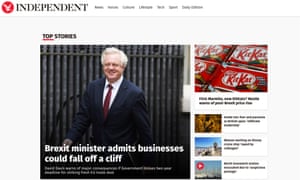
Independent.co.uk: traffic fell by 11% in September

Link: https://www.theguardian.com/media/2016/oct/20/newspaper-website-print-sales

Summary:

All of the UK's newspaper website had suffered an Olympic dip in September, leading to significant declines to the Daily Star and The Independent as print papers proved to be more resilient (powerful/dominance). The Sun has seen a drop of 1.52% in readership views on their site to 2.9 million readers. Mail Online has also seen a decline in readership views to about 3.2%, The Guardian fell by 4.65% month on month like other newspapers. The most affected newspapers (online ones) were the Independent which dropped by 11% , Express fell by 9.48% and the Daily Star fell by 26.3%. The print market had proved to be much more dominant during this period, with The Financial Times and The Guardian having an increase in circulation month on month. 

Statistics:
  • The Sun had dropped by 1.25% in readership
  • The Sun received 2.9 million readers after the decline
  • Mail Online had lost 3.2%
  • The Guardian fell by 4.65%
  • Independent had lost 11% in readers
  • Express fell by 9.48%
  • Daily Star fell by 26.3% which was the biggest drop out of all the news sites
Own view:

The article doesn't seem to show a legitimate reason why the readership value had decreased so significantly for the online platform. My biggest guess, is the fact that the Olympic's (which was mentioned int he article) gained so much news coverage, the e-media platform seemed to have been the best way to keep up to date with the scores, which thus resulted in bigger readership value as people were tuning in to see the updates. However, since the Olympics had finished, people who didn't use the internet for these updates would return to their normal source of news which may well be newspapers. 

Monday, 17 October 2016

Don't build a paywall around a public good

Newspaper's are a public good


1) Why does Clay Shirky argue that 'accountability journalism' is so important and what example does he give of this?

Shirky argues that accountability journalism is what keeps corruption out of its way from iconic people. Meaning, from government and from places where people trust those who hold the most power, in this case it is the Church. He gives a story about what the new 'Spotlight' movie is based off of, where a group on journalists try and solve a case regarding sexual assault towards children, and the Boston church having an involvement with this case. Shirky believes that without quality journalism, such cases like the one previously mentioned would not come to light and the people will be under the power/control of a corrupt person. 

2) What does Shirky say about the relationship between newspapers and advertisers? Which websites does he mention as having replaced major revenue-generators for newspapers (e.g. jobs, personal ads etc.)?

Shirky said that it was thanks to advertising that helped journalism be the best quality as it would produce a lot of revenue. He states that the profit received from news advertisers isn't enough to cover the threat of change. It was an accident for advertisers to successfully join with newspaper firms. Advertisers had to overpay for the services they received, due to very little substitutes available at the time. He mentions a company his friend set up called Xerox PARC stating that there was wide investment in Ethernet and graphic user interface. He also stated that monopolies were the ones who were trying to change the R&D departments.

3) Shirky talks about the 'unbundling of content'. This means people are reading newspapers in a different way. How does he suggest audiences are consuming news stories in the digital age?

The media is demand rather than supply, he states that when a reader wants a new page, that page is already printed for them to click on. News would't need to be stored in a warehouse in case someone 'may' want to purchase it, its already out there. He gives examples of online sites that do what advertisers do, craigslist, match and monster. These are sites that operate under a similar pattern to the advertisers for news companies. The see that public's goods rather than commercial ones. And it is because of such a saturated market, revenue streams for online advertising is plummeting. He believes that in the future there will never be a digital dime (news for free).

4) Shirky also talks about the power of shareable media. How does he suggest the child abuse scandal with the Catholic Church may have been different if the internet had been widespread in 1992?

The paper (back then) didn't just attract people. The majority of the audience for Boston Globe were Catholics, and by reader a story that is to do with their religion is something that they will spread across the community. So much so, that the audience numbers were like a chain reaction, spreading and spreading on a global scale. 

5) Why does Shirky argue against paywalls?

He states that paywalls are seen as a violation of the contract, and that it won't bring them any value by charging a price for it. The whole point to change for such products is to take an infinite good and turn it into a finite good. And the papers have to act upon the public to stop creating news so that the business model would work (to generate money). Shirky believes that we (as audience members) should continue pubic journalism.

6) What is a 'social good'? In what way is journalism a 'social good'?

There is something called 'social production' which is where a group of people come together to and do something for themselves. Shirky states that we need people to come from outside the market and outside managerial culture which can help them provision them self enormous amounts of public goods. 

7) Shirky says newspapers are in terminal decline. How does he suggest we can replace the important role in society newspapers play? What is the short-term danger to this solution that he describes?

Shirky states that news papers are something that is "irreplaceable", as it is the one source where accountable journalism can take place properly. Although the media landscape has a vast growth and success, it won't be enough to keep the industry going, and it is up to the audience to decide how they are going to keep this fairly significant industry alive. 

8) Look at the first question and answer regarding institutional power. Give us your own opinion: how important is it that major media brands such as the New York Times or the Guardian continue to stay in business and provide news?

Over the years, newspapers have come common to providing their audience a specific view point on a subject matter. For example, UK newspapers follow a certain wing of the government and will base their argument off of that. The thing is, is that audience members like to consume information and stories based off of things that value their ideologies and share similar perception to them. If someone is against David Cameron, they will look up a newspaper that is very right wing, as it provides audience pleasures. It is this form of interactivity that big named news corporations have developed and therefore gained a big reader base. Due to this loyalty and audience pleasures they provide, people will stay loyal and continue to support the paper as they receive pleasure and entertainment from their content.

Sunday, 16 October 2016

The effects of online technology

Newspaper versus online technology

1) Agree.disagree with Rupert Murdoch's decision?:

I don't agree with Murdoch's decision because, BBC have had a public remit of being loyal and basing their content for the viewers best interest. There public remit is to, educate, entertain and inform. This is the prime reason why the BBC first started, it was for the best interest of their viewers. And it means that, audience's deserve to know about the world around them for free regardless the platform. I do see it from Murdoch's perspective, that news corporations that started this entire empire of allowing society knowing things about the other side of the world, is something that should be available as it has helped many people and saved millions of lives. Without news corporations, corrupt people and crisis in other countries would be kept national and no-one would know. However, BBC are ensuring they help their audience in every way possible, and to change their entire routine all of a sudden, will be going against the foundations from which their business first started.

2) The Times Paywall article:

I do believe it is a good idea for Murdoch to place his online news papers under a paywall because it will help journalism and news companies to continue to produce content and break news stories that benefit society. Even though in the previous question, I believe that putting news for free is a good thing, its solely for BBC only. I believe, that newspaper companies who want to tackle free online news sites, they should go under a paywall as it would help to pay for journalists and I believe they are a key factor towards society and contribute a lot. They are the ones who go out to challenge people's ideologies and find the hidden truth behind iconic people. For example, a group on journalists went under-cover and found evidence against the Sam Allardyce corruption values and how he planned to rig the Fifa system. If it wasn't for people paying for news, this news wouldn't have broke and peoples 'iconic champion' would be a corrupt man who would be doing illegal activities without anybody (including the fans) knowing.

3) Two comments analysis:
  • "It is so ridiculous if these mainstream newspapers believe that they can "force readership of fee-based news. One can get the same "news" for free almost anywhere on the internet. I'd take a hint from the alternative free weeklies that survive just off their local advertising. I don't think anyone would read them otherwise. These papers are full of paid advertising. The fee model will never work"             -Jerry Harris
I do agree with the following statement made by Harris, because 'free' news online isn't going to benefit the industry in the long-run it won't generate a lot of revenue. The only reason why current newspaper are still surviving is because of the vast advertisement they receive. This isn't enough to keep the industry on their feet, especially if all their hard-work and content is out on the web for free.
  • "The company now has lifetime value and renewable revenue attached to its 
    digital customers where previously it had none' – could this BTW is an analogy for the Labour Party, re shifting from the block vote to individual membership?"
I don't agree with this comment. This is because the commentor believes that news should be free and that, paying for them is an absurd decision. She states that to this day, there isn't anything that the newspaper industry is suffering from and that they have a life time of revenue when this isn't the case.

4) Why has the "Evening Standard" had such an increase in revenue during the past 2 years?:

The reason why the Evening Standard has gained so much in revenue during the past 2 years is because of the loyalty their customers have towards the paper. They would rather pay for their news than buy/try out another newspaper. The same applies for clothing brands. A Nike trainer charges £200, a loyal customer will still buy the trainer due to their loyalty to the brand. This is the same thing for newspapers. Evening Standard may share ideologies and values that their readers have, and that is something readers can't find in other newspapers. Therefore, for charging for their paper, there audience will not hesitate to pay for the paper.

5) Is there any hope for the newspaper industry or will it eventually die out? Provide a detailed response to this question explaining and justifying your opinion.

With broadcasters such as the BBC still continuing to provide audiences with free news, it will eventually lead to big name news corporations to die out. I don't think BBC will be influenced by the impact free news has had on other news corporations as they have an audience to provide for. The BBC's main priority is their audience and they get revenue from the license fee. I do think, that they may not all die out. This is because if the news corporations successfully pull of a pay-wall, any journalism stories that are broken out should be given only to their subscribers. This will force people to pay for the news as they will come to realise the importance of paying for news.