Thursday, 17 November 2016

NDM: Social media alternative attracts users banned from Twitter

Social media alternative attracts users banned from Twitter

Gab was founded in August, following the high profile banning of Breitbart’s Milo Yiannopoulos from Twitter.

Link: https://www.theguardian.com/media/2016/nov/17/gab-alt-right-social-media-twitter

Summary:

This article is about a new site called 'Gab' which has segments from Twitter and Reddit combined in to one new thing. This site is like a social media site and it allows users to post updates without any character limitations, with memes, links and gifs. There have only been a few people who can get in as a member, and currently it holds tens of thousands of people on its waiting list. Many of these accounts are people who have been banned from twitter and users are making friends with 'exiles ghosts'. Since the election, Twitter has risen the ban hammer of alt-right accounts who are prominent. 

Statistics:
  • 10,000 and more users are on the waiting list


Own view:

I believe that it is completely unnecessary to do a ban wave when no actual harassment data has been proved to have happened. The right way is the handle the situation in detail as an uproar from the fan-base will occur and this is something that Twitter can no longer tolerate especially when they go rid of their most successful app known as 'Vine'.   

NDM: Fake news clampdown: Google gives €150,000 to fact-checking projects

Fake news clampdown: Google gives €150,000 to fact-checking projects

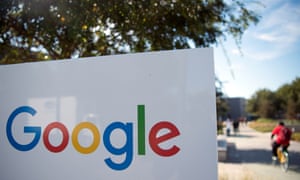
A Google sign at the Googleplex in Menlo Park, California

Link: https://www.theguardian.com/media/2016/nov/17/fake-news-google-funding-fact-checking-us-election

Summary:

Google has given 150,000 euros to three UK organisations to go through their engine to fact checking to help journalists. This has lead to public people to avoid fake news from Google's engine. This story as risen suspicion for other social media sites such as Facebook whether they are too spreading fake stories to consumers. 

Statistics:

  • Google has given 150,000 euros to three UK companies to fact check
  • The money is from a £20.5 million round funding from Google's digital news initiative
  • Full Fact will be receiving 50,000 euros
  • Another 50,000 euros goes towards Factama
  • There was also another fact checking organisation in Italy which received 45,000 euros

Own view:

I believe that these organisations despite being 'dominant' compared to news organisations, they are trying to destroy themselves if this error doesn't get fixed. Everybody (majority) use the internet for advice and help, and if what they consume is incorrect it will lead to disloyalty amongst audience members whom may go back to using print platform. This could be the break that the print organisations have been waiting for. This is because news on print is, if ever, wrong and this can result in news organisations gaining customers back due to all these 'false' news stories. 

Monday, 14 November 2016

Marxism, Pluralism and Hegemony

NDM: Marxism, Pluralism and Hegemony


1) Research the Ian Tomlinson case. What would the traditional, hegemonic view of the police be in a case like this? How did new and digital media create a different story? What does the police officer's subsequent acquittal suggest about the power of new and digital media?


The Ian Tomlinson case was when an elderly man was walking past a protest where the police suspected him to be part of the protesters leading to a police officer attacking the man on the legs, which resulted in his Ian's death.

The Hegemonic view of this (without the cell phone footage) would be that it was absurd to blame the police for committing such a crime. During that time, there hasn't been any major police brutalities being seen in England ever, and therefore to here of it during then would have been absurd. People believe the police to be 'good' and unlaw-breakers who enforce the law and it is seen as 'common sense'. People would deem the death to have been a 'natural' event, as the police stated that 'they believed him to be part of the protest', which in turn makes the viewer believe them without challenging the opposition.


2) What does the author argue regarding whether hegemony is being challenged by Web 2.0? 


The author argues 

3) In your opinion, does new and digital media reinforce dominant hegemonic views or give the audience a platform to challenge them?

I believe that to this day, there is some form of hegemony seen across news papers, but it isn't as used, or seen often than it previously was. This was because before the digital age where consumers could have the voice and ability to challenge stories, they were passive readers. The news was something far more than information, it was a way of life. It was the only way to know what was actually happening on the other side of the world, and since there was no media platform to challenge this, readers grew passive and believed (consumed) every peace of news given to them

This had lead to news  organisations obviously noticing such patterns in their consumers and would therefore use this to their advantage. Since their content has essentially paved a way for news organisations and the media to spread their views and ideologies for the people lower down to consume and believe it. Consumers had fallen blind in to believing that any news stories presented to them is for their best interest and nothing else. However, since the birth of the digital age and that the internet has allowed more accessibility for audience members across the world to challenge these views, hegemony through-out the media has come to a stand still, if not, then to a decline. This is largely because the ability to control the audiences minds and give them what they need rather than what they want has been broken due to the internet breaking down this wall.

4) Do recent world events such as Brexit or Donald Trump's election in the US suggest dominant hegemonic ideologies are being challenged or reinforced? There are arguments for both sides here - explain your opinion and why.

I believe that the media will find any possible event or news story to attempt to use hegemonic ideologies in their piece. This is because it is something that the whole world 'cares' about and that they will consume every piece of news to benefit their interest. Since demand for news stories such as the ones above were so big across the world, this gave the media the ability to try regain their power and influence amongst its audience. News stories by The Sun did this to a large extent where they shared their views on the US election showing who they believe to be better and focusing their entire article slamming the other candidate. Why?. Because they know how passive their audience members will be, and internet is of no power when it comes to stories such as this. Broadcast and newspapers are the ones that gain the most power during events like these.

Monday, 7 November 2016

News Values

News Values

1) Come up with a news story from the last 12 months for each of the categories suggested by Harriss, Leiter and Johnson:

  • Conflict- Syrian war. The rebels fighting the government Assad. This is an on going fight where the country itself is the battlefield over changes in the government system. Rebels are trying to over-throw Assad so that they can implement their values and ideologies in to the government system.
  • Progress- the on-going process of Brexit is still being dealt with, by the prime minister as well as Parliament. It is a progress as, both audiences and the government head themselves need to know where about they currently stand in terms of the process of officially leaving the EU after the Referendum vote. 
  • Disaster- The unfortunate earth quake in Italy where less than 300 people have been said to have been killed during this disastrous event. This has been known to be one of the most disastrous earthquakes in the 21st century. 
  • Consequence- Sam  Allardyce a former England manager has been sacked due to price fixing of players and 'rigging' the system to purchase players at cheap price. This scheme has resulted in his sack which is a big consequence for going against a prestigious title like the England manager. He has been fired from the job and has been stripped off of his titles. 
  • Prominence- The US election thus far has shows significant importance across all news channels and is bringing forth more information and details regarding this event. 
  • Novelty- Facebook needs an editor story. This is a rather unique story showing the need for an editor and that technology cannot always be reliant for news and information as shown with this recent Facebook topic. 
2) What example news story does the Factsheet use to illustrate Galtung and Ruge's News Values? Why is it an appropriate example of a news story likely to gain prominent coverage?

The core story that the factsheet illustrates is the death of the British soldier against the conflict arisen in Afghanistan. Considering the majority of the new papers being from the UK, they tend to report news that is local, or in association with the country. Furthermore, it was the first death of a 'female' officer to have been killed and therefore, the news believed it to have been a more heartfelt and shocking story as this even doesn't occur often.  
3) What is gatekeeping?

Gatekeeping is basically an editor or someone behind the news corporation who simply selects news and information they deem 'important' or 'more significant' for the audience. They don't tend to show the full picture and what they do pass through, is one source out of many which they have selected to go on to their site or newspaper. It is essentially preventing all content from being published and only a handful can be selected and mediated.


4) What are the six ways bias can be created in news?
  • Section/mediation
  • Placement of content
  • Media uses/photos videos
  • Headline (what run's the story/defines it)
  • Titles
  • Wording (that editors use instead of another)
5) How have online sources such as Twitter, bloggers or Wikileaks changed the way news is selected 
and published?

These media outlets allow the audience/people gain access and freedom over news they want to here from, that may have been mediated for censored prior. This is because news used to be the dominant factor over its audience, whatever they produces their audience consumed. However, the digital ages has allowed news that was censored to give that freedom t the audience who deem it important compared to mediated version. In other words, it gives the audience the true perspective of the story rather than being edited and been shown a specific angle.


6) Give an example of a news story from the last 12 months that was reported as a result of online technology - Twitter, Wikileaks or similar.

There was a video that was captured using Facebook's latest feature 'Facebook live' which allowed a black woman to record her husband being shot in a car by a police officer. She captured the entire scene and it was used as evidence in court. This was a coverage that wouldn't have been world news as it would have likely to have been sealed in American doors and the whole world would have forgotten about police brutality. 


7) What does this reveal about how Sky views Twitter as a news source?

It shows how dominant the social media platforms are on the audience. If news were to ever break, we (the audience) view it on a social media site like Twitter as that is the most convenient and efficient way of receiving news than compared to Sky as they have to spend hours of filing and checking their facts before publishing their articles, and audience acknowledge that.

8) What does it say about how news is being produced?

This effect in tern has changed the role of journalists. In the 21st century we (the audience) are now experiencing a range of citizen journalism being reported to news. Citizens who report the news are effectively replacing the journalists in the news industry as the news is being solved before someone has to go out and solve it themselves. 

9) What role does the audience have in this process?

The audience have gained a more significant role ever since the digital age rose. It has given the audience the most power, and the institutions have lower power. There is a power reversal where it is no longer the audience being passive and consuming the news, but institutions are the ones consuming the audiences news and reporting it. 

10) Why might this be a problem for journalistic standards?

Quality. It is said that citizen journalism brings with it a lot of pros to the industry and to news in  general. However, it seems to have brought along many cons, many of which is the loss of quality for news. Previously, news was very top quality report, file checks and numerous hours of source checking to ensure that all data is accurate for the audiences to consume. However this 'new' story telling has lost that quality, shaky footage and screaming really draws the attention away from news as it is not what news is.


Final tasks

8) In your opinion, how has new and digital media technology changed Galtung and Ruge’s news values?

The introduction of the digital age upon news industries is something that has effected the news values to a great extent. The way in which audiences receive these stories effects every one of the factors that contribute to news story-telling. Things like, immediacy has become irrelevant (to a somewhat large extent). This is because as soon as news is broken by a citizen, social media and the WWW all con tribute to help deliver this piece to as many audiences as possible and it generally comes across really fast. Audiences don't have to look for news, news will be given to them like that.


9) How would you update them for 2016? Choose SIX of Galtung and Ruge's news values and say how each one has been affected by the growth of new and digital technology.

Immediacy- news no longer creates the sense of 'need' amongst audience member. The internet has taken that immediate need away, and whenever there is a news story to be consumed, it will find its way to the audience.
Unambiguity- citizen journalism has created the sense of 'the unknown'. We don't quite understand what's going on and why we are being shown this, it is a story that is kept (often) behind closed doors and creates a sense of anonymous[sy]. 
Balance- Often when a  news story is to be told, their is a twist and a turn to which and how the story is told. It isn't the original core story and therefore has been mediated to a large extent. Now, thanks to the internet, we have the audiences to argue this change. They may know the bitter truth that audiences are hiding through their titles, their wording or even their views. The digital era has opened to doors for the audiences to fight back and they are no longer passive. 

Friday, 4 November 2016

Citizen journalism and hyper-reality

Citizen Journalism and Hyper-reality


Citizen journalism and UGC (user-generated content):

1) Notes-
  • examples
The news had dominated its stories at the time, it would create news and deliver it to a passive audience to consume and believe. Now, due to the rise of technology, audience members are no longer passive to news, but creating their own form of content. Audience have become the users, and the users have become the publishers. We are now in the era where UGC has now eroded the dominance of institution over audience members.
  • theory (audience reception etc.) 
Receptive audience= an audience member that receives and consumes the news without having their own opinion and believing what is being shown to them
UGC= content created by audience members and spread around to the public, becoming creators of news content.
Power reversal= institutions have now lost some of the power to dominate the audience, as audience members can now voice their opinion using technological advances.
  • benefits to institutions 
Institutions have news given to them rather having to pay journalists to go out and collect news stories. This is because it takes a great effort to go out and find stories that will entertain the audience, and so UGC has had a good impact in that regard. They can use the content that society has submitted and use that as their news story. 
  • benefits to audience 
Audience members can now have  a more trust worthy source as majority of UGC content is not been meidated in any way. Meaning that it hasn't been edited to show one side of the argument like typical news channels/papers are. As well as, technology has helped spread awareness of the matter as people all over the world can view this situation and spread it to other people.

2) What is meant by the term ‘citizen journalist’?

Citizen journalist is someone who is not doing journalism as a career, and rather captures news/evidence in public and submits it for the whole world to see. The difference is, is that it is the public who do citizen journalism as anyone present at an event can capture moments and key details that can draw up concern for the government such as racism caught on streets etc.

3) What was one of the first examples of news being generated by ‘ordinary people’?


The Rodney King case. This was when a speeder was caught by police and beaten (he was an African American), and the event was captured by a onlooker who recorded this event and published it to the world. This had sparked a lot of evidence of police brutality and is one of the most iconic citizen journalism ever.

4) List some of the formats for participation that are now offered by news organisations.

  • Q&A polls
  • Chat rooms
  • Comments enabled
  • Message boards
5) What is one of the main differences between professionally shot footage and that taken first-hand (UGC)?

One of the main difference between professionally shot footage and UGC journalism, is the quality. This is because those who capture footage don't think about the smooth shots, they want to capture the moment as it is happening and at times, expresses their emotions. For example, shaky footage can show horror and being scared through the movement of the camera. In addition, professionally shot footage have a lot of smooth shots and generally has a presenter talking to the audience/news presenters to give context to what is being shown.


6) What is a gatekeeper?

A gatekeeper is someone who is in an organisation (preferably a news co-operation) who decides whether or not to publish a form of news that they have seen as well as preventing certain things to be broadcasted. They essentially prevent certain news, regardless of their content, to be viewed by audiences as they have other news that they deem to be more important. 

7) How has the role of a gatekeeper changed?

Independent media on the web is the way to go around gate keepers. This is a system where UGC can be submitted and it can reach a niche audience, and often people who before thought they didn't have a voice, to now feel as if they do. 

8) What is one of the primary concerns held by journalists over the rise of UGC?

One of the primary concerns that journalists have over the rise in UGC content is that news corporations may decide to rely on citizen journalists to do the stories for them, as they don't have to pay them for their work, and it will cut down their costs. Journalists are afraid that their jobs may no longer exist as there are people doing their jobs for them.  

9) Offer your own opinion (critical autonomy) on the following:

What impact is new/digital media having on:
  • news stories
A wider variety of news is available than ever before. People are not restricted to a few pages of content, like traditional news papers did. They can see a whole range of stories and ones that are of best interest to the reader.
  • the news agenda (the choice of stories that make up the news)
It is having a major impact on the news agenda. This is because online sites such as Twitter and Facebook may own a 'hot' news story that one of their users have broken out. This will become the 'hot' topic of the week, and it will influence news companies to get hold of that information and attempt to do their own news coverage in order to gain more readers.
  • the role of professionals in news
NDM is having more of a negative impact on professionals. This is because the internet allows their content to be published and shared around for free, and they are not getting paid for the work they done. This will appose a threat to this job position as the company wants to survive and to do so, they must cut down their costs such as employees.

Hyper-reality and the digital renaissance:

1) The article was written in 2009. Offer three examples of more recent social networking sites or uses of technology that support the idea of a 'digital renaissance'.

  • Snapchat
  • Instagram
  • Twitter
These three examples support the idea of the digital renaissance as users have the ability to communicate and interact with people of different cultures and they also develop their perception of cultures and society in the developed world. This is because, on these sites, users can create there own perception on how they want to be viewed online.

2) How do live streaming services such as Periscope or Facebook Live fit into the idea of a 'digital renaissance'? Are these a force for good or simply a further blurring of reality?

This is more of reality than anything else. This is because the apps and services mentioned all have a key feature; being live. This means that what people see, is the reality of what is actually happening and there is very little, if any' editing actually being presented. This is the difference that videos and these services have different. Services such as FB Live are showing the reality whereas videos have been edited and are not showing the reality of it.

3) How can we link the 'digital renaissance' to our case study on news? Is citizen journalism a further example of hyper-reality or is it actually making news more accurate and closer to real life?


Citizen journalism if anything, is making us a viewers/audience becoming closer to real life than ever before. Yes, to an extent the footage captured can be showing one side of the argument, however it is content which the viewer can relate to. It expresses the emotions which current news doesn't have, which is why news needs to be changed. It needs to feel more like 'news'. News is information that is informing the viewer on events and real life issues, however they need to express emotions and power, which is why news isn't as effective as it doesn't succeed in that prospect. Citizen journalism can really change the way news comes across the the audience/viewer. 
Thursday, 3 November 2016

NDM: Importance of digital evidence

Police not able to recover digital evidence is "not acceptable"

A mobile phone being used

Link: https://www.theguardian.com/uk-news/2016/nov/03/police-failures-over-digital-evidence-are-unacceptable-says-watchdog

Summary:

Police force seem to be lacking knowledge on recent digital crimes and that those who are suffering from abuse have given up on the police to aid them in their situation. The court states that it is a top priority for the police force to get a better understanding of digital devices, so that they know how to tackle abuse online. Furthermore, an anecdote stated, that it took 8 months for the police to find evidence of criminal behaviour. 

Statistics:

  • The court had found that 8/43 forces were substandard
  • it took 8 months for a case to be resolved which was to do with digital abuse
Own view:

I believe that digital abuse is as equal as real abuse and that it is still breaking the law. The police are people who are serving justice and need to be aware of the constant changing of the digital world. It is an area that they may deem to be less significant as nobody is actually being harmed, however it can result in serious consequences if ignored. Therefore, the digital platform isn't something to irrelevant, but something that should be guarded and safe for every citizen using it,

NDM: Telegraph to include a paywall

Telegraph starting a paywall subscription?

Chris Evans: seeking deeper engagement.

Link: https://www.theguardian.com/media/greenslade/2016/nov/03/telegraph-paywall-initiative-is-an-interesting-strategic-shift

Summary:

The Telegraph has announced that it will be placing a paywall on its 'premium' content, which is seen to be an interesting shift. It will involve only 15% of the output that the Telegraph produces, but they want to send out a message that its journalism is worth paying for. Although there is a large quantity of its content out for free, they believe that audiences should pay for a subscription to receive the premium content. The editor for the paper states they they didn't know very much about their audiences and therefore, this new idea they are implementing will enable that to happen. 

Statistics:
  • 15% extra output produced by the paper
  • 85% of the news will be free
  • 825 of its readers access their site through mobile devices
  • Over a year ago, those figures was slightly higher than 50%
Own view:

I believe this is the step in the right direction. This is because I believe that journalists who do the hard work of discovering scandals and bringing wrong-does to justice should be paid for their work.Allowing news be put out for free is not the right way to go, as institutions are firing their journalists as they cannot pay them due to not enough revenue being received. By placing a paywall on a platform that is largely dominated by free content, will allow subscriptions to be put in place, ensuring that journalists are being paid for their work. Furthermore, the Telegraph did something clever. They have been constantly been giving their premium content for free, and to its core audience who are loyal to the company are aware of this section. By placing a paywall it turns the product in to a necessity to this audience. They are so used to receiving this premium content for free, they they demand to get it and so they are likely to sign up for a paid subscription.