Thursday, 1 December 2016

NDM: Chiara Ferragni – how a ‘crazy blogger’ turned her life into a shop window

Chiara Ferragni – how a ‘crazy blogger’ turned her life into a shop window

Chiara Ferragni at Paris fashion week in October 2016
Link: https://www.theguardian.com/fashion/2016/nov/29/chiara-farragni-blogger-the-blonde-salad-socia-media-style-posts-multi-million-pound-business

Summary:

Chiara Farragni, also known as The Blonde Salad has started blogging in 2009, documenting camera-ready personal life etc. 7 years later she has received over 7.3 million followers via Instagram, 1.2 million likes on FB and 14 million page views per month on her website. She is now selling everything from suitcases to stilletos designed by herself. There is even custom boots that have also been designed by Farragni which includes her signature logo.

Statistics:
  • 7.3 million followers via Instagram
  • 1.2 million likes on Facebook
  • 14 million page views per month on her website
Own view:

New and digital media has created another pro for itself. It goes to show, that this new media platform can also offer career opportunities to the users who use it. There have been many successes via the internet where dozens of people have gotten successful via YouTube or even just viral videos. It actually creates a figure head who can become just as powerful (if not even bigger) than other organisations. One person on the internet can have access to over 1.2 million, whereas a business with over 2,000 outlets can gain over 1.2 million customers. It goes to show that the digital age has given the ability to users to not only consume the news they like, but also create their own, they can be the voice of the people and can actually pose a threat to big institutions, which is why they are a target for a partnership deal.    

NDM: YouTueb Star Casey Neistat has been bought by CNN

YouTube Sensation Bought by CNN for $25 Million 

Link: http://www.highsnobiety.com/2016/11/28/casey-neistat-cnn-partner-project/

Summary:

YouTube sensation Casey Neistat had previously created his own social media-esk app, called BEME. It is essentially an app where followers (and the general public) could share a video for a certain amount of time, by simply holding down the censor on the phone to record. Since Casey had reached a large audience that institutions (to this day) still cant get a grip of; the youth. Casey's prime audience is the young generation and CNN- in order to attract this audience has partnered up with Casey by buying his social media business for $25 million in hope that they will create their own media brand which will target and attract the young demographic.

Statistics:
  • Sold BEME for $25 million
  • Has over 5 million YouTube subscribers
Own view:

I believe this seems like the future for institutions. New and digital media platforms has created the gap in the market to obtain the young generation; something that can grasp hold of their attention and actually entertain them rather than giving them something that they should watch. There have been many partnership's with YouTuber's by big named institutions in order to help them gain the audience that these 'figure heads' have. Another example, is Fouseytube. Yousef has had the pleasure of starring in his own Hollywood film. This wasn't simple a random pick. The institution looked at his audience with under 10 million subscribers. 

Sunday, 27 November 2016

Marxism & Pluralism Essay

Marxism & Pluralism Essay

Q: The development of new/digital media means the audience is more powerful in terms of consumption and production. Discuss the arguments for and against this view.

New and digital media has created a range of opportunities to the public and to businesses. It has brought not only media potential, by togetherness within the world. However, new and digital media platform has brought about changes, changes that seemed impossible to attain until now and this will be discussed within this essay.

Audiences have become more powerful in terms of consumption and production to a large extent. This is because, big institutions can no longer inflict their dominance and power over audience members as they used to. Institutions such as businesses and media organisations used to manipulate audience members to purchase a product or consume a piece of news without having the time to challenge them. For example, a news institution like The Sun could inflict their own ideologies regarding politics and it will simply be consumed by passive consumers. However the tables have turned to such an extent, that there has essentially been a power reversal. Audience members have the ability to speak out, and not to be the passive consumers that they once were and institutions have realised this. In fact, institutions who abused their power by inflicting their ideologies upon their consumer base has left a tremendous impact on their survival as an industry as a whole. Audience's trying to gain news about the outside world seemed to be a necessity, something that they must obtain, now they can access news for free and can essentially continue to get what they want without even demanding for it. This has lead to a tremendous deduction in power from institutions in to the hands of the audience member. A Marxist would argue that there would have been the elite at the top of the chain who were the ones trying to dumb-down audience members in order to attain their power. And to a large extent it is true. Society was under the influence of Marxism, where rich powerful men/women would use their power and products in order to keep control of society and that they remain at the top. However, this has no changed, with audience members now gaining a voice to argue against certain values and interpretations that are given out.

In addition, the creation of citizen journalism feeds in to the fact that audience are now active producers rather than passive consumers. The birth of the digital age has widened the opportunities and availability for the audience to interact and participate in news. Over the years, citizen journalism has boomed starting with the first ever encounter; the Rodney King case. This was an offence done by the police of LA who would have gotten away with treason, by creating a false story. However, it was thank to this citizen journalism of recording the event, which brought the world, including the government the realisation that there is corruption upon its justice system. There has been many more encounters where citizen journalism has seen to be even more important than the Daily Mail reporting "cat climbing trees". It show that citizen journalism have given news organisations something to investigate, something to report on. In a way, citizen journalism has proved that individuals who interact with digital media, can be as important as journalists are simply due to the information they are reporting on key events.  

On the other hand, audiences may have become the least powerful (still) even after the introduction of the new and digital media platform. This is because although over the years, these institutions have been trying to dumb-down their audiences, they have gained a loyal market full of customers who are loyal to the brand. What has happened essentially is that customers want to receive their news by a certain institution because they have built a strong relation with it for numerous years and the brand loyalty can take control of them than the internet can. Institutions such as The Daily Mail have created a strong brand and image to customers, that over the years they will have so many loyal customers they cant really be challenged due to this loyalty. Institutions do take advantage of this for example, The Daily Mail has decided to go under a pay wall where there will be a 10% premium news available to those who subscribe. They wouldn't just add an extra 10% of news if they felt that they wont get anyone to subscribe. The fact is, is that they are well aware of their consumer base, and they know that there are a lot of loyal customers who use their site as a number one source for new, therefore compelling them to subscribe. This example is recent, and shows that there is still even to this day power in the hands of institutions. 

Finally, the main problem with the digital age is that, users (society) have become so active they are simply reporting on things that are unnecessary or just are simply degrading news quality. One of the prime reasons for the internet's creation was the allow people to connect to one another from a greater distance. But, it has advanced tremendously since then, where the digital platform allows people to hare their views and ideologies on the web where other people can read them. Although this is innovation we all demanded (a voice), it has brought about many problem. Like Andrew Keen once said "web pages and blogs are like a million monkey's typing nonsense". This is clearly the problem today. We (the audience/consumers/producers), have been so caught up with the idea that the internet allows us to do virtually anything, but we don't stop and think about misleading others with the content we publish. The internet is made up of many people's views and values, and therefore there is bound to be a few hundred who will read the post and believe it. This is degrading news, and powerful institutions have tried to tackle this by showing their significance. By building an 'illusion' of truthful news. There are now websites such as the BBC which are one of the most used web pages currently online, simply due to the trust it has developed in the users. This goes to show that although the internet makes the public all more powerful, it also creates an opportunity for the power institutions to re-brand themselves whilst a 'internet war' is occurring.    

Overall, I believe that it is the audience that have gained the power to consume and create their content rather than institutions. New and digital media has brought more power towards the people rather than institutions. It is the big name media organisations that have been hit the most due to new and digital media, with profits staggering low and getting lower by the month just show that they are no longer relevant to consumers as they can get what they need elsewhere via the internet. Audiences have had the ability to comment on stories they offend them, they can look at other sites for proof. These are all things that didn't exist before new and digital media. Some would say tat we live in a pluralist society, where there is a classless system. I believe this to be true as institutions are now wary on how they deliver news and are more cautious when giving news. They fear the power the audience members have and want to maintain this sense of loyalty amongst them.  

NDM: Here's the truth: 'fake news' is not social media's fault

Here's the truth: 'fake news' is not social media's fault

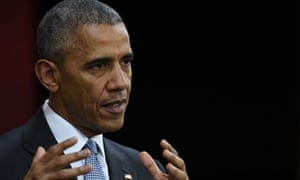
Barack Obama: ‘everything is true and nothing is true.’
Link: https://www.theguardian.com/media/greenslade/2016/nov/23/heres-the-truth-fake-news-is-not-social-medias-fault

Summary: 

Before, there used to be news that would be challenged by the peoples views and ideologies, now we have news trying to battle these fake news articles that people on the internet have created. This article shows how the demand for a platform to help give the consumers a voice, was not a good idea after all as it is seen to have done more bad than good. It states that these 'fake news' were not only advertising heavy, but were propagandistic, one example is the US election. 

Statistics: 
  • 500 students at a university had banned The Sun, Daily Mail and Daily Express from entering the school grounds

Own view:

This article shows another flaw in the new and digital media spectrum. When people ask for something that has never happened before, it will become exploited and used for their own gain similar to the way the 'fake news' stories have come about. People have become so obsessed with this 'power' that they are ready to abuse it for entertainment and misleading purposes. 

NDM: Journalists win 'ending violence against women' awards

Journalists win 'ending violence against women' awards

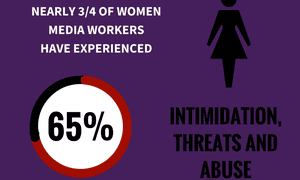
A finding by the International News Safety Institute’s survey.
Link: https://www.theguardian.com/media/greenslade/2016/nov/25/journalists-win-ending-violence-against-women-awards

Summary:

There is an award that praises people who prevent violence upon women known as, "Ending Violence against Women and Girls Media Awards". There was more that 150 entries that were considered for the award. The awards are to symbolise the breadth of contemporary journalism in this field.  

Statistics: 
  • Over a 150 entries were considered for an award

Own view:

This award is more than just an award for those who support and aid those who have been abused. It highlights the importance of journalists and that they do more than just report on news, they actually help people. This furthers the point that journalists should be known for the work they do and people should pay them for the hard work they put in to saving other peoples lives, whether it is through paper or in person. 

Sunday, 20 November 2016

Marxism & Pluralism: Alain de Botton on the news

Marxism & Pluralism: Alain de Botton on the news


1) To what extent do you agree with Alain de Botton's views on the News?

I agree to a large extent on Alain's view of the news. The fact that the two possibilities of keeping control of the population is very fascinating. First possibility is, to stop all news from being given to the population to ensure that they have no idea about the out-side world they they won't care for it anymore. The second one (which is what still happens in today's society), give the audience so much news that they will forget about it. This is something that still is in use today, as there will be so many news headlines the audience member will find it hard to keep track of what they just read a few hours later.


2) How can you link Marxism and Hegemony to de Botton's criticisms of the News?

News corporations are very much trying to control and influence the consumers by the content they give out. This links in with the Hegemony theory as the news tires to inflict its power amongst those below it, be it the lower class etc.


3) How could you use Pluralism and new technology to challenge de Botton's views on the News?

With the birth of new technology such as the internet, it has given more freedom to the consumers and they are not as passive as they once were. What de Botton argues is that the consumer is very passive in today's society due to the overflow of news being given to them all at once. However, there wasn't a lot of reflection on the other side of the argument. That digital media has allowed audience members to challenge those views.Things like blogs and comment sections allow the audience to give their opinion on a news story and if a particular issue is found, it can quickly raise awareness than it previously wouldn't have had.


4) Choose two news stories from the last six months - one that supports de Botton's views and one that challenges his belief that the News is used for social control. 

News story: De-railed train

The story of the train that de-railed in England was a story that was quite significant locally, but was a story that the majority of society had forgotten. Stories such as Andy Murray's number 1 ranking was one of many stores that week that overflowed this stories significance. Even as a consumer myself, I had completely forgotten that this story even existed as there was so much news being pumped out that it was hard to remember what had even happened yesterday. So much news is being reported, that there will only be 30% that we will remember the next day and will probably forget the next week entirely.

News story: US election

This was a story that again was covered in so much detail that it made the consumers sick and tired if learning more about it. News coverage of the candidates for the election was non-stop for the last 6 months leading up to election day. so much coverage, although it got people knowing about the event, it made people (including US citizens) uninterested in learning more about the election as they had been fed too much of it.